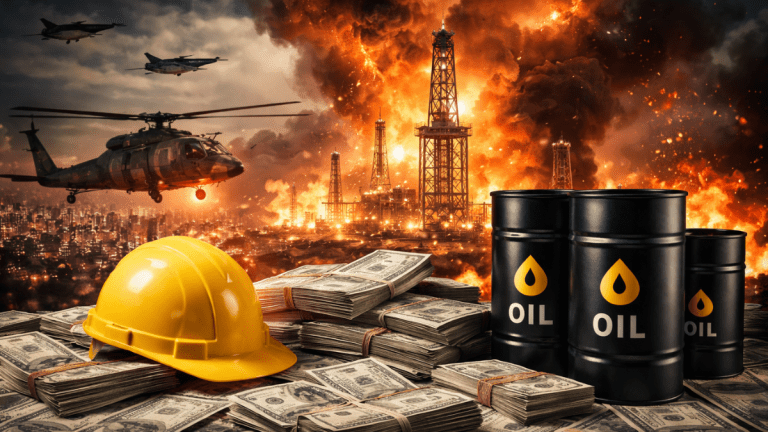
The president Donald Trump made a striking public statement that raised serious questions about power, money, and decision-making at the highest level of government. While speaking to reporters aboard Air Force One, he openly said that he informed major oil companies about plans to strike Venezuela and detain its longtime leader. This admission came even though lawmakers said they were not informed in advance. The remarks quickly sparked anger, confusion, and concern across Washington and beyond.
Oil companies briefed by Trump before elected lawmakers
During the flight, the president said he spoke with oil companies both before and after the military action. Donald Trump described them as “crucial” to rebuilding Venezuela’s oil infrastructure once the country’s leadership was removed. According to him, the oil system in the country had fallen apart. He used simple words to describe it, calling it old, broken, rusty, and unusable.
Donald Trump explained that pipes were lying on the ground and that years of poor management had left facilities in bad shape. He added that no serious investment had been made for a long time. Because of this, he said large American oil firms were ready to step in and “do a great job” fixing things.
However, this admission caused immediate backlash. Several lawmakers said they were never notified about any plan to attack Venezuela. Under U.S. law, Congress plays a key role in approving military action. Critics argued that briefing private companies instead of elected representatives crossed a dangerous line.
Trump government moves ahead with Alaska oil drilling plan in sensitive wildlife refuge
The administration dismissed the criticism. Officials said the operation did not count as a war. They described it as a law enforcement action aimed at arresting a foreign leader on criminal charges. Based on that claim, they argued that congressional approval was not required.
Still, many questioned why oil companies needed to know about the plan at all. For critics, the order of events raised red flags. First came talks with businesses. Only later did the public hear about the operation.
Conflicting claims over power, control, and oil
For years, the White House had said it did not want to change the government in Venezuela. Officials repeatedly claimed that oil had nothing to do with U.S. actions in the country. They said their goal was stability and accountability, not control of resources.
Yet the president’s own words told a different story. After the Venezuelan leader was detained, he said the United States would now “run” the country and be “in charge.” Trump also spoke openly about taking control of the oil industry and sending in American companies to revive it.
Donald Trump described Venezuela as a “mess” and a “dead country.” He said oil production was far lower than it should be, given how much oil the country holds. According to him, even badly managed fields should still produce more than they did.
He then laid out a clear plan. Large oil companies would go in. They would fix the infrastructure. They would invest money. At the same time, he stressed that the U.S. government itself would not invest funds. Instead, it would “take care of the country” while private companies handled the oil.
Japanese scientists unveil method to turn leftover oil underground into low-carbon hydrogen
These statements fueled concerns about motive. If oil was not the goal, critics asked, why speak so openly about seizing control of it? Why promise business opportunities to specific industries before the operation?
The president’s remarks made the debate sharper. They connected military action, economic gain, and private interests in a way that many found troubling.
Lawmakers question the legality and motives behind the operation
The operation against Venezuela did not come out of nowhere. For months, tensions had been rising. The U.S. had increased pressure through sanctions, seized oil tankers near Venezuelan waters, and blocked others from moving freely. Many feared that a direct strike was only a matter of time.
After the attack, several lawmakers said the action amounted to an illegal declaration of war. They argued that the Constitution requires Congress to approve such moves. They said surprise bombings without debate undermined democracy and oversight.
The administration stood firm. It repeated that the mission focused on criminal charges related to drugs and terrorism. Because of that framing, officials said the action fit under law enforcement, not warfare. Even so, critics rejected that explanation. They said the scale and impact of the operation went far beyond an arrest. They pointed to airstrikes, foreign detention, and open talk of controlling another country’s resources.
One senior lawmaker summed up the concern during a television interview. He said the situation was about money, not safety. According to him, powerful financial interests stood to gain if American companies took over Venezuela’s oil sector. He argued that foreign policy decisions were being shaped to benefit a small group rather than the public.
Ask me in 20 days: Trump’s Greenland remark sparks fears of new US Arctic power play
These claims added to public unease. Many people began asking who truly influenced the decision-making process. Was it elected representatives, national security experts, or private companies with billions at stake?
The president’s own admission kept the questions alive. By saying he tipped off oil companies but did not mention Congress, he drew attention to priorities that critics found alarming. The issue was no longer just about Venezuela. The issue sparked a debate about power, transparency, and who holds influence when leaders make life-changing decisions.