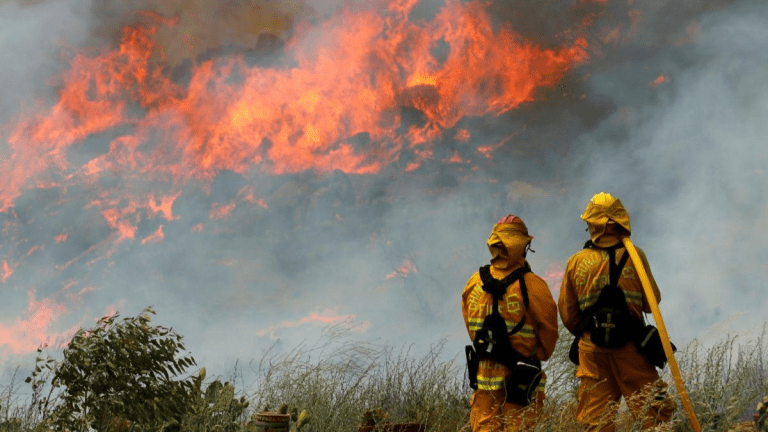
Wildfire smoke is no longer a distant problem tied only to forests or remote mountains. It has become a daily health threat for millions of people across the United States and beyond. Smoke from fires now drifts across states, crosses borders, and settles over cities that have never burned. What makes this crisis more alarming is that scientists are discovering it is far bigger and deadlier than earlier estimates suggested.
Wildfires are growing stronger and more frequent as temperatures rise and landscapes dry out. These fires release thick clouds of smoke filled with tiny particles and gases that are dangerous to breathe. Even when flames are far away, the smoke can linger in the air for days or weeks. For many people, the damage does not come from fire itself but from what they inhale.
Wildfire Smoke travels far and harms more people than expected
Wildfire smoke does not stay near the flames. Winds can carry it hundreds or even thousands of miles. A fire burning in one region can darken skies in another. This means people who have never seen a wildfire can still feel its effects in their lungs.
The smoke contains very small particles known as fine particulate matter. These particles are so tiny that they slip deep into the lungs and even enter the bloodstream. Once inside the body, they can trigger coughing, breathing trouble, chest pain, and heart problems. For children, older adults, and people with asthma or heart disease, the risks are much higher.
Health researchers have found that wildfire smoke causes far more deaths than official fire counts suggest. While reports often focus on people who die in the flames, smoke exposure quietly affects many more. Studies now show that smoke-related deaths can outnumber fire-related deaths many times over. In some major wildfire events, hundreds of additional deaths may occur due to smoke, even though they are not immediately linked to the fire.
Smoke exposure has also become more common. Entire summers now pass under hazy skies in many parts of the country. Schools, outdoor workers, and families face repeated exposure year after year. What was once rare is now routine.
Fire emissions are much higher than scientists once believed
Scientists are also learning that wildfires release far more pollution than earlier measurements showed. For years, satellites tracked fires using large grid squares. If a fire did not fill the entire area, it was often missed. This meant many small fires were left out of global calculations.
New technology has changed that picture. With sharper satellite images, researchers can now detect fires that are much smaller but far more numerous. These fires may burn fields, grasslands, farms, and edges of forests. On their own, they look minor. Together, they create a massive source of smoke and greenhouse gases.
With this improved view, scientists have found that the total land burned each year worldwide is about double earlier estimates. That means smoke and climate-warming gases from fires are also much higher. Carbon emissions from wildfires are now believed to be around 70 percent greater than once thought.
Different fires also behave in different ways. Forest fires burn trees, plants, and sometimes soil, releasing large amounts of carbon dioxide and methane. Grass fires burn faster but still produce smoke that affects nearby communities. Some fires burn underground in carbon-rich soil and can smolder for weeks. These hidden fires release pollution slowly and steadily, even when they are hard to see.
Many small fires occur near where people live. Roads, farms, and towns break up the land, preventing fires from growing large. Firefighters often stop them quickly. But while these fires may not destroy cities, their smoke rises into the air and spreads. Because they happen closer to homes, their health impact can be immediate.
Human activity also plays a role. In populated areas, there are more chances for fires to start. Sparks from equipment, discarded cigarettes, and agricultural burning all add to the number of small fires. Over time, these fires create a constant background of smoke exposure for nearby communities.
Children’s health and air quality are under growing strain
One of the most troubling effects of wildfire smoke is its impact on children. Young lungs are still developing, which makes them more sensitive to dirty air. Doctors are seeing more asthma symptoms during smoky periods, even in seasons that were once considered safer.
Fine particles from smoke irritate airways and make breathing harder. For children with asthma, this can lead to more coughing, wheezing, and asthma attacks. Data shows that during heavy smoke years, asthma control worsens, even when children are out of school and exposed to fewer indoor triggers.
Smoke does not stay the same as it travels. As it moves through sunlight and mixes with other pollutants, it can form new harmful chemicals. These include ozone and other toxic compounds that further irritate the lungs. This makes wildfire smoke different from normal air pollution and sometimes more dangerous.
At the same time, longer and warmer seasons are increasing pollen levels. Smoke and pollen together place extra stress on people with breathing problems. For families and healthcare providers, this has made it harder to predict when symptoms will flare up.
Air quality monitoring has struggled to keep pace with the problem. Many communities lack enough sensors to track smoke levels in real time. Without clear information, people may not know when it is safe to go outside or when to protect themselves indoors. Schools, especially, face challenges in deciding whether to hold outdoor activities during smoky days.
Wildfire smoke has turned into a public health issue that touches nearly every region. It affects rural towns and major cities alike. It harms people who live close to fires and those hundreds of miles away. The crisis is not limited to one season or one place. It is woven into the air itself, becoming a hidden but powerful threat that many are only beginning to understand.