
🕒 Last updated on December 3, 2025
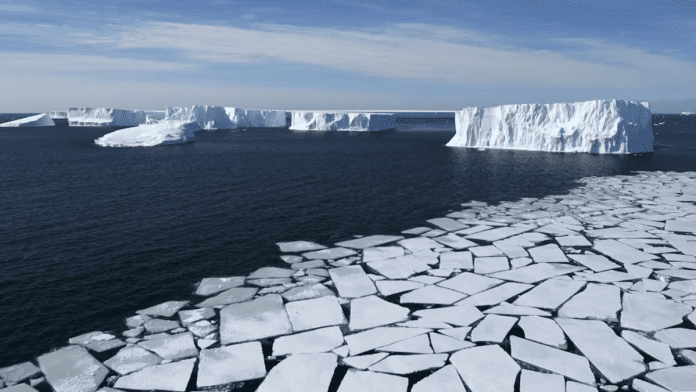
Antarctica is often seen as frozen, silent, and unchanging, with sharp winds, cold waters, and endless ice. But even this quiet world is shifting. These slow changes are influencing how much carbon dioxide stays in our air, and scientists are watching closely. As the ice thins and warms, hidden rocks that have been buried for thousands of years are appearing. These newly exposed rocks may play a much bigger role in Earth’s climate system than anyone once thought.
Hidden Rocks Coming Alive
When the thick ice sheets melt or shrink, small rocky peaks start to pop out. These peaks are called nunataks. They might look tiny compared to the huge ice fields around them, but they have an impact that reaches all the way into the ocean.
As soon as these rocks are exposed to the open air, they begin to break down. This process is called weathering. Over time, the broken-down pieces turn into fine sediments. What makes these sediments important is that they are full of nutrients that the ocean can use, especially iron.
Research on mountains in East Antarctica showed something surprising. The rocks sitting above the ice had iron levels up to ten times higher than earlier samples from other parts of the continent. That means these exposed rocks are like secret nutrient stores waiting to be unlocked.
Glaciers and icebergs pick up this iron as they slowly move along. When they melt into the ocean, they release the iron into the water. This becomes food for tiny ocean plants called phytoplankton. Even though phytoplankton are small, they play a major role. They absorb carbon dioxide from the air through photosynthesis, acting like tiny ocean forests.
Scientists also found that nunatak sediments hold more than three times the amount of extractable iron compared to sediments already being carried toward the coast. Some samples were even covered in a reddish rust-like stain, showing that the exposed surfaces had a lot of iron built up in them.
This slow release of iron is shaping the waters around Antarctica in ways we might not notice at first, but the effects are real.
The Ocean’s Natural Carbon Helpers
The exposed rocks act almost like an iron-producing factory. During the summer months, sunlight hits the dark surfaces of the rocks. Even when the air stays freezing cold, the rocks can warm up enough for weathering to happen faster. This releases more iron, which eventually finds its way to the ocean.
Satellite images have repeatedly shown bright green patches in the coastal waters near glacier outlets. These are phytoplankton blooms. They appear when the iron in the water gives phytoplankton the boost they need to grow.
The Southern Ocean is already one of the biggest natural carbon sinks on Earth. That means it absorbs a large amount of carbon dioxide from the atmosphere. When phytoplankton grow in large numbers, they pull even more carbon dioxide out of the air.
Elon Musk warns of global war within 5 to 10 years citing rising geopolitical tensions
This natural process does not eliminate the carbon humans produce, but it does help show how Earth has its own systems working quietly in the background. These systems can influence how carbon moves between the air, the land, and the sea.
Scientists studying these rocks and sediments have found that the effect is not limited to just one place. Many areas in Antarctica have similar mountain peaks that could release small amounts of iron. When all of these small amounts are added together, they may have a much larger influence on ocean life and carbon levels than previously thought.
However, none of this happens quickly. Antarctica does not rush. Even when the sediments form in the mountains, they move very slowly. Glaciers can take anywhere between 10,000 and 100,000 years to transport these sediments to the coastline. But past studies of seafloor sediment show that iron has been delivered to Antarctic waters for thousands of years already.
This tells us that the natural process has been working for a long time. As more rocks become uncovered due to warming, the amount of iron reaching the sea may increase over time. The system is slow but steady.
A Long, Slow Path That Shapes the Planet
Antarctica is far from most people’s everyday lives, but what happens there still affects the whole world. The continent’s hidden iron pathway is one of nature’s quiet tools. It does not fix climate change, and it does not work fast, but it offers important clues about how the Earth balances carbon on its own.
As the ice continues to change and more rock becomes exposed, the process may become stronger. The Southern Ocean will keep absorbing carbon dioxide as phytoplankton bloom in its waters. These tiny organisms, fed by the iron carried from the mountains, play a part in shaping Earth’s climate.
While the changes happening in Antarctica may seem small and slow, they are connected to powerful natural cycles. These cycles influence the air we breathe, the oceans we depend on, and the climate that shapes our future.
Antarctica may appear still and silent, but beneath that calm surface, the planet is working in its own quiet way.